

After four decades working with public agencies, utilities, engineering firms, and private organizations, I’ve seen a consistent pattern: technology neglect never fails quietly. It rarely collapses overnight. Instead, it erodes performance slowly, subtly, and predictably. And by the time leadership recognizes the depth of the problem, the cost to recover is exponentially higher than the cost of steady modernization would have been.
Organizations don’t usually refuse to upgrade out of ignorance. They delay upgrades because budgets are tight, staff are busy, and “the system still works.” I’ve heard that phrase thousands of times. The system still works—until it doesn’t. And even before it fails outright, it quietly drags the organization backward.
Let me walk you through what really happens over time.
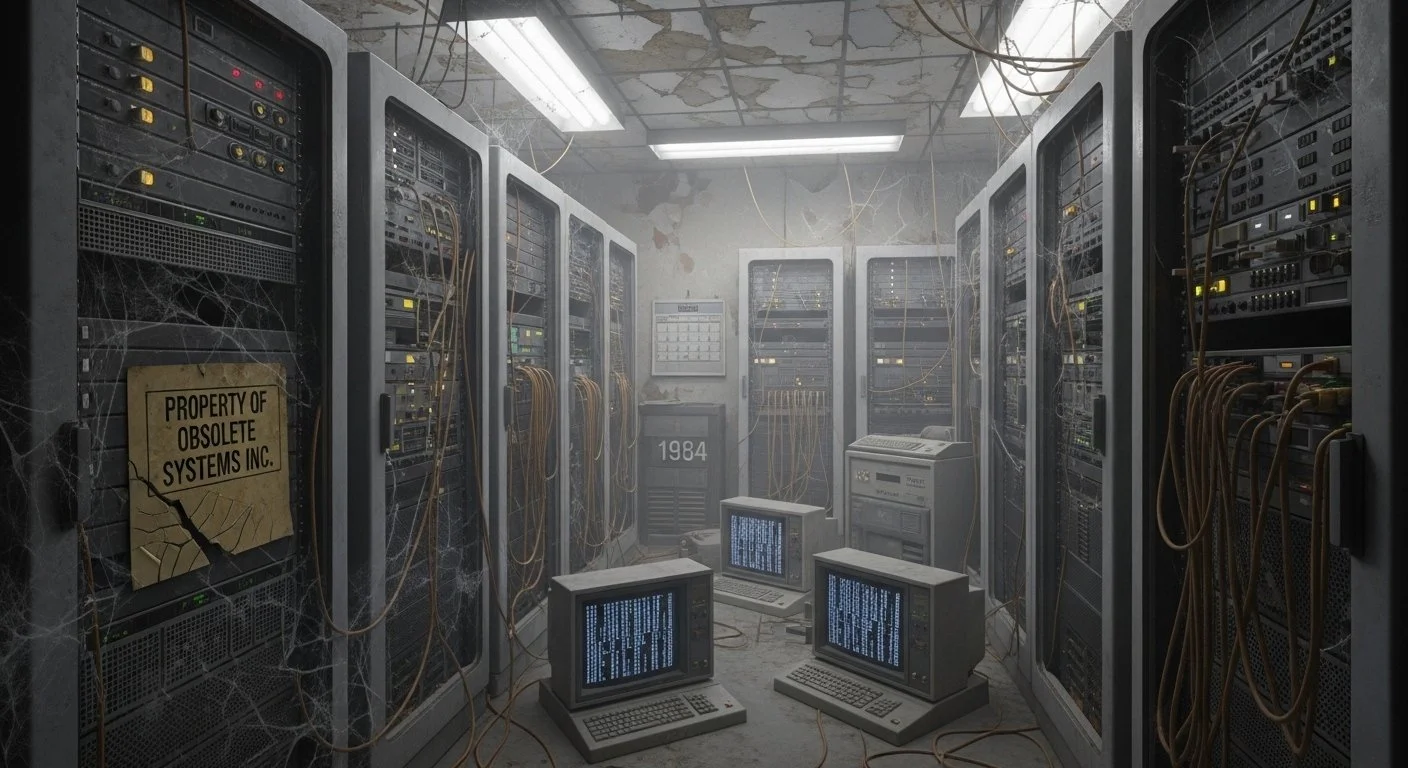
The Slow Decline of Operational Efficiency
When software and hardware age, performance degradation becomes normalized. Systems load more slowly. Reports take longer to generate. File transfers stall. Employees begin creating workarounds—manual spreadsheets, shadow databases, printed backups “just in case.”
These compensations accumulate. Ten minutes lost here. Fifteen minutes lost there. Multiply that by 50 employees, then by 240 workdays a year. The financial impact becomes staggering.
The organization doesn’t notice at first because the decline is incremental. But over time, productivity drops while payroll costs remain constant. Leadership begins by asking why output hasn’t increased. The answer is often buried in aging infrastructure.
Security Becomes a Ticking Clock
One of the most dangerous long-term effects is security exposure. Vendors eventually stop supporting older platforms. Security patches end. Updates stop. And yet, the organization continues to store critical data on those systems.
Guidelines from the National Institute of Standards and Technology clearly emphasize lifecycle management and timely patching as foundational to cybersecurity. Ignoring that guidance doesn’t make the risk theoretical—it makes it inevitable.
In my career, I’ve seen organizations avoid a $50,000 upgrade only to spend $500,000 responding to a breach. Data recovery, legal review, public relations damage, and regulatory scrutiny—those costs are not abstract. They are real, measurable, and painful.
The tragedy is that most of them were preventable.
Vendor Support Disappears—And You’re On Your Own
When organizations remain on outdated software, vendor support becomes increasingly limited. Eventually, you are told, “That version is no longer supported.” From that moment forward, every issue becomes more complicated and more expensive.
I’ve watched teams cling to legacy desktop environments long after modern platforms like ArcGIS Pro had become the industry standard. The longer they waited, the harder the transition became—not just technically, but culturally.
Staying behind isolates your workflows from innovation. It makes integration with new systems difficult. And it increases reliance on custom scripts and patches that only one or two people understand.
That is not stability. That is fragility disguised as familiarity.
Innovation Quietly Stalls
Modern platforms bring automation, integration, cloud collaboration, and analytics capabilities that simply don’t exist in older systems. Organizations that refuse to upgrade don’t just miss new features—they miss new ways of thinking.
Over time, they stop asking, “What could we do better?” and start asking, “How do we keep this running?”
That shift in mindset is dangerous. It turns proactive organizations into reactive ones. Competitors who adopt modern tools streamline workflows, reduce costs, and deliver faster results. Meanwhile, the stagnant organization wonders why it’s falling behind.
Innovation doesn’t die dramatically. It fades gradually.
The Financial Myth of “Saving Money”
One of the biggest misconceptions I’ve encountered over 40 years is the belief that deferring upgrades saves money.
It doesn’t.
Deferred upgrades create technical debt. And technical debt compounds. Emergency replacements cost more. Consultants charge more to untangle legacy systems. Downtime becomes longer because parts are harder to find and expertise is rarer.
What could have been a scheduled, predictable capital expense turns into a crisis-driven operational expense.
The math is consistent: planned modernization costs less than emergency recovery.
The Human Impact: Stress, Frustration, and Burnout
Technology neglect affects people more than spreadsheets.
When employees fight their tools every day—waiting on slow systems, redoing lost work, manually fixing preventable errors—it drains energy.
Morale declines. High performers become frustrated.
You can see it in meetings. People stop proposing improvements because they know the system can’t support them. They stop experimenting because change feels risky in a fragile environment.
Over time, disengagement becomes cultural.
Professional Stagnation
When organizations don’t invest in training alongside technology upgrades, they unintentionally leave their workforce behind.
Employees who are not trained on modern tools become less competitive in the broader job market. Their professional confidence erodes. Career mobility narrows.
This isn’t just an HR issue—it’s a leadership issue. Failing to train staff signals that development is not a priority.
Talented people notice.
Recruitment and Retention Challenges
The next generation of professionals expects modern tools. When candidates discover that an organization relies on outdated platforms and offers limited training, they reconsider.
Those who accept positions may leave within a few years for environments where they can grow. That turnover carries recruitment costs, onboarding costs, and lost institutional knowledge.
Modernization is not just about technology. It is about remaining an attractive place to work.
Knowledge Bottlenecks and Retirement Risk
One of the most overlooked risks is institutional dependency on a small number of employees who understand legacy systems.
I’ve seen organizations where one individual “knows how everything works.” When that person retires, panic follows. Documentation is incomplete. Custom code is undocumented. Processes are tribal knowledge.
Modern systems, when implemented correctly, distribute knowledge and standardize workflows. Legacy systems often centralize knowledge in individuals.
That’s a dangerous concentration of risk.
Interoperability Breakdowns
Today’s operational environments require integration—cloud systems, APIs, data sharing across departments. Older systems struggle to communicate effectively with newer platforms.
The result is duplication, inconsistent datasets, and fragmented reporting. Decision-makers begin questioning data reliability, not because staff are careless, but because systems aren’t aligned.
Data integrity suffers when infrastructure ages.
The Compounding Effect Over Time
What makes all of this especially dangerous is that none of it feels catastrophic at first. It feels manageable. It feels tolerable.
But these effects compound:
Slight inefficiencies become standard practice
Minor security gaps widen
Small morale issues grow into cultural fatigue
Training delays turn into capability gaps
After 10 or 15 years of deferred upgrades, the organization faces not one problem, but dozens—interconnected and expensive to resolve.
Modernization at that stage becomes disruptive because the gap is so wide.
What Sustainable Organizations Do Differently
Organizations that remain resilient treat technology like infrastructure. They establish:
Hardware refresh cycles
Software lifecycle policies
Scheduled upgrade paths
Continuous training programs
Budget forecasting for modernization
They plan change rather than react to failure.
They recognize that standing still in technology is not neutral—it is regression.
Final Thoughts From Experience
Over forty years, I’ve never seen organizations regret proactive modernization. I have seen many regret postponing it.
Upgrades are not about chasing trends. They are about maintaining capability, protecting data, supporting employees, and preserving competitiveness.
If leadership views technology as an expense, modernization will always feel painful.
If leadership views technology as infrastructure—the backbone of operations—modernization becomes responsible stewardship.
The organizations that thrive over decades are not the ones that avoid change.
They are the ones who manage it deliberately, consistently, and with foresight.